The students entering training today will need to competently supervise AI from their first day of practice. They’ll need sharper clinical reasoning, earlier, than any cohort before them. And it’s arriving at exactly the moment when pipeline pressure is reducing the clinical exposure available to build it. So how does a medical student develop core reasoning skills when the required resources are this stretched?
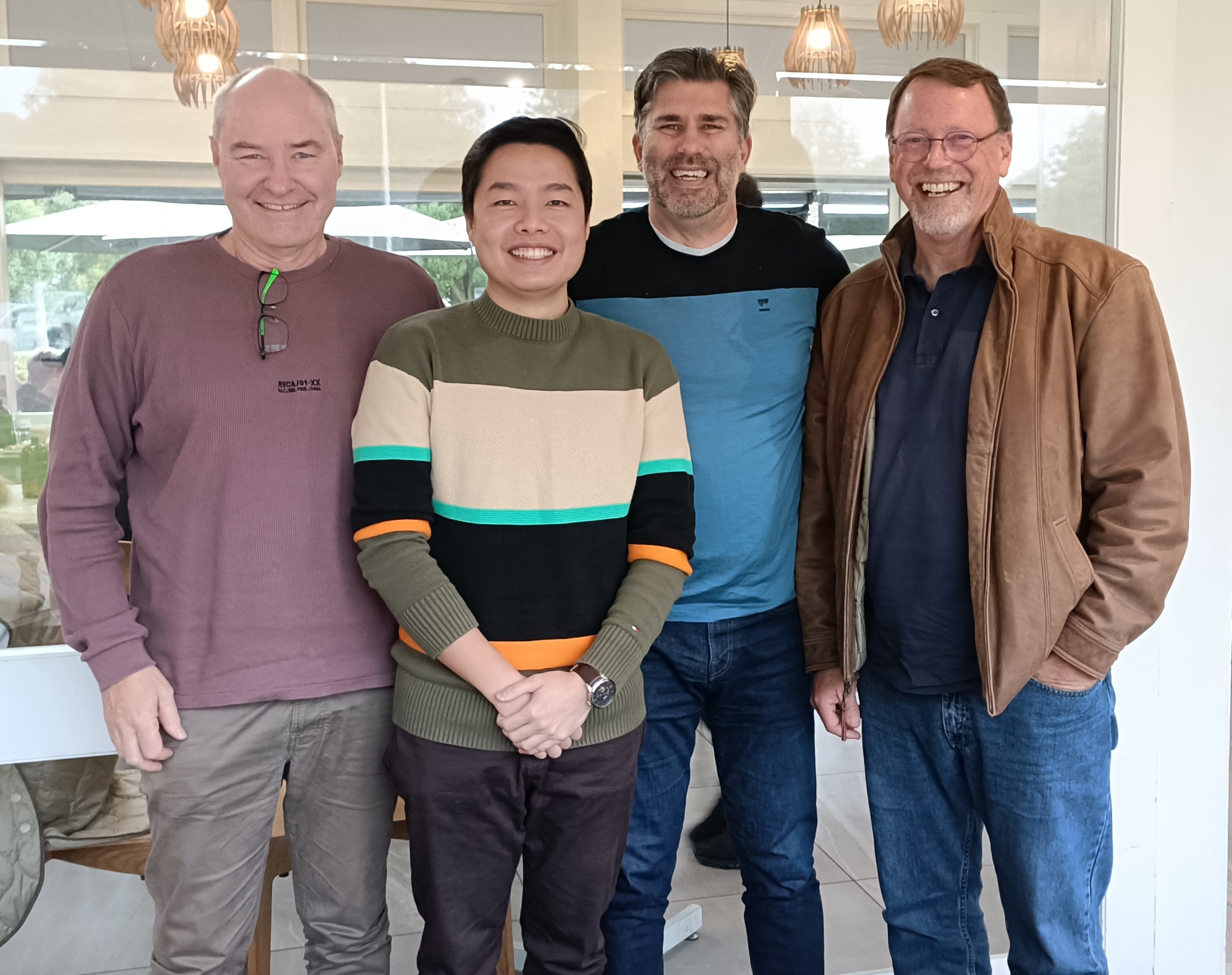
That is the gap a new AI platform called Gestalt is built to fill, using simulated patient scenarios to complement regular training. It was co-founded by CEO and doctor Alastair Dunne, Chief Scientific Officer and doctor Nick Wright, and Chief Technical Officer Jacopo Vecchi.
“Gestalt is a way for medical students to practise their consultation and reasoning skills between placements,” says Dunne.
“Clinical reasoning usually happens on the ward and develops through repetition and supervision. That’s becoming harder to access: more students competing for the same supervised time, and the clinicians who would supervise them stretched thin.”
Dunne points to NHS England’s Long Term Workforce Plan, which aims to double annual medical school intake to 15,000 per year by 2031, as a sign the pressure is only going to grow.
“The other piece is the rise of AI in clinical work, which changes what the human role looks like,” says Dunne. “Aviation is the closest parallel. As autopilot has become more capable, pilot training has moved toward the moments when human skill matters most: recognising when something is wrong, taking back control, and landing the plane. Tomorrow’s doctors need to do the same with AI - look at a confident answer, know when it’s wrong, and take back control. Pilots build that judgement in the simulator. Medical students need somewhere to do the same.”
Can an AI tool work here? Wright says it can, if it’s built for the job. “Using LLMs for consultation practice has emerged as an idea over the last couple of years,” he says. “What’s different about Gestalt is that it’s purpose-built for clinical reasoning practice. The AI is constrained by a structured medical knowledge graph, so what students see is curated clinical content rather than a freestyled language-model output.”
Dunne says the platform’s clinical feedback is guided by that structured medical knowledge and trusted sources, including a knowledge partnership with the New Zealand Formulary. That foundation is essential, he says, and the harder problem the platform is built to solve sits on top of it.
“The thing that actually makes a doctor safe - and the kind of doctor people want to see - isn’t knowledge recall. It’s asking the right questions. Listening for what’s not being said. Holding uncertainty long enough to reason through it properly. That’s clinical reasoning - the most human skill in medicine. It’s not built through exams or textbooks. It’s built through practice, repetition, and feedback. That’s what Gestalt is designed to support.”
Using Gestalt, a medical student can run a simulated consultation with an AI patient, with the platform building the differential diagnosis alongside them as the history unfolds and flagging conditions or important signs they might have missed. Structured feedback then reflects back on both the consultation and the underlying reasoning, while separate study modes - including disease cards and dynamic multiple-choice questions - reinforce the clinical knowledge base that underpins it.
Feedback is immediate, private, and specific. Students can build their confidence without the performance anxiety of practising in front of peers.
“The student can revisit Gestalt time and time again - there’s that repetition element - to build their knowledge and confidence,” says Dunne.
“Over 90 per cent of medical students are already using more than one AI tool to study (JMIR, 2026),” Dunne adds. “In our interviews with New Zealand students, the picture was the same; most are reaching for ChatGPT or similar. The question isn’t whether the next generation of doctors will learn with AI - they already do. The question is: what is that AI grounded in? A general-purpose chatbot trained on the open internet is not the same as a clinical learning environment grounded in structured medical knowledge and trusted sources. Both are AI. They are not the same. That distinction is what we’re building.”
Two rounds of usability pilots with New Zealand medical students have given the team a useful early signal: significant reductions in cognitive load compared with students’ usual study methods, strong system usability scores, and - on the second pilot - a Net Promoter Score of +55 with no detractors.
Gestalt opened commercially to New Zealand medical students this week. Over the next six months, the team is focused on getting the platform into the hands of as many New Zealand medical students as possible, establishing a footprint in Australia, and securing funding to scale.
They’re also talking with academics here and in Australia about how Gestalt might be integrated into the curriculum.
For Dunne, it comes back to a simple idea. “The best way to learn is by doing, and students need a place to get those reps,” he says. “Our job is to give them that, in a way that scales, because that’s what the medicine of the next decade is going to need.”
The same logic, the founders see, applies to other disciplines where reasoning under uncertainty matters - nursing and postgraduate medical training among them.
Find more information here
.jpg)