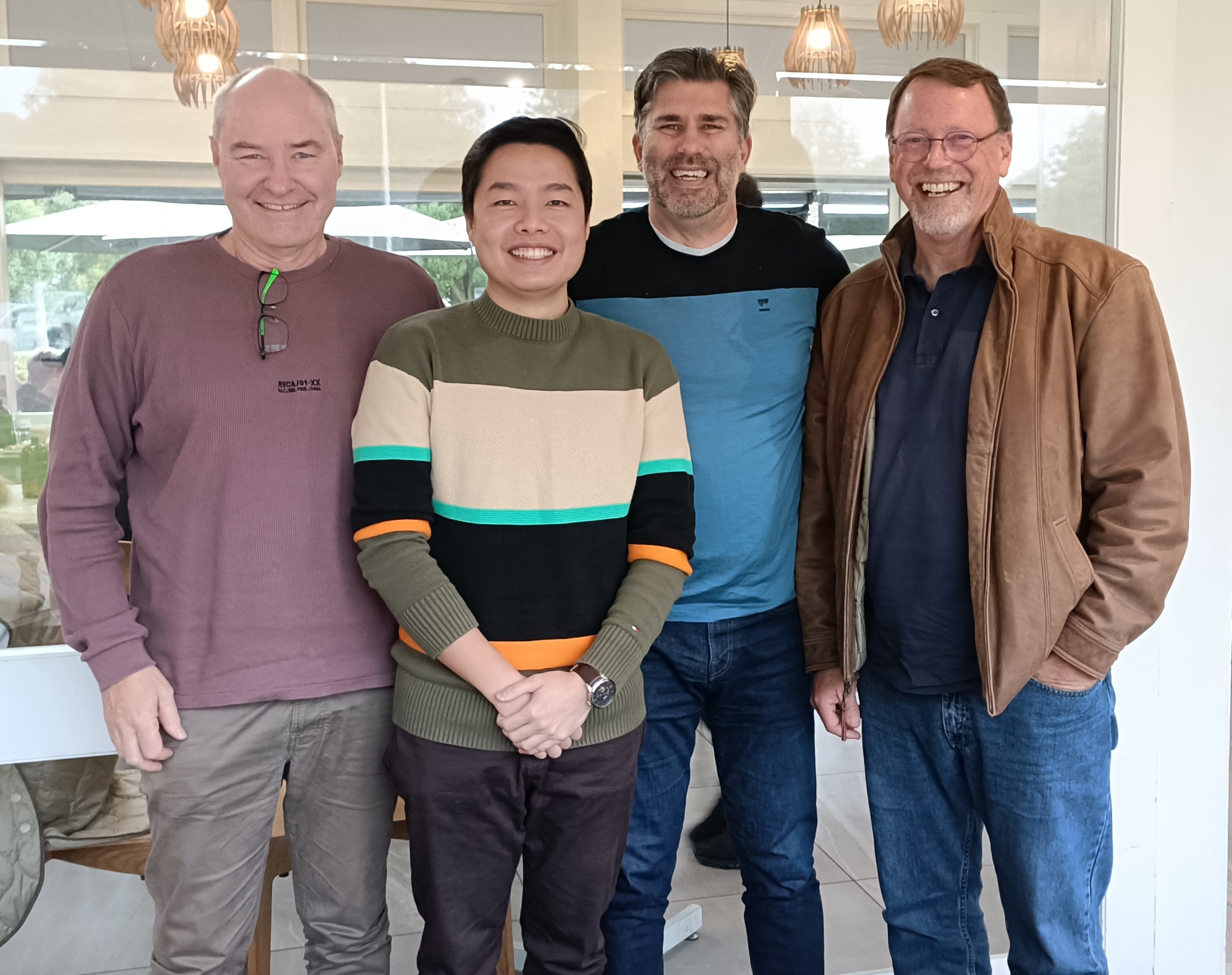
We all experience pain differently – and that’s a problem Drs Jo Nunnerley and Dea Dauphinee are trying to solve for women having minor gynaecological procedures.
Nunnerley is a clinical researcher with a background in physiotherapy, and a Senior Research Fellow in the Department of Orthopaedic Surgery and Musculoskeletal Medicine, University of Otago Christchurch. Dauphinee is an Assistant Research Fellow and physiotherapist with a background in musculoskeletal and pelvic health physiotherapy and public health research, and they are both working at the intersection of clinical expertise, health research, and emerging digital technologies.
“When it comes to procedures such as a colposcopy or insertion of an IUD, it’s very difficult to provide adequate pain relief. Between 40 and 50 per cent of women rate IUD insertion pain as unacceptable, and this can stop the procedure,” says Nunnerley.
“We audited 100 hysteroscopy cases in Christchurch and found many women experienced discomfort. For some, the pain was 10 out of 10. We also found they had very little control over the pain relief they were offered which was generally paracetamol or ibuprofen.”
While there is evidence that non-pharmacological support such as music, hypnosis, distraction or squeezy balls for the hands can help, Nunnerley says these weren’t always offered. “Women want a range of options to manage pain, they want to control those options, and they need to be customisable – a one-size-fits-all approach doesn’t work."
They began with a workshop involving researchers, gynaecologists, and women with lived experience with the goal of identifying a hierarchy of different pain management methodologies.
“We found that VR (virtual reality) headsets weren’t ideal because the patient is cut out of the room and can’t communicate with their clinical team. Then we looked at MR (mixed reality) where smart glasses blend physical and digital worlds but keep the patient fully in the room and able to communicate with the clinical team,” says Nunnerley.
Their solution is a customisable virtual companion. “This is not a healthcare companion. This is a companion where the patient can customise it across appearance, culture, and voice. We know, for example, that people respond to accents, finding them supportive or off-putting, so being able to choose an accent is a huge advance,” says Dauphinee.
“We can take that customisation further with functions such as music to distract, breathing exercises, hypnosis, meditation, grounding exercises,” says Nunnerley.
“Christchurch Hospital provided a nurse for support. Some women liked this, others felt they had to be polite to the nurse. We’re proposing a much broader scenario where the patient can talk to the companion about anything from AI to teapots. It will be the patient’s choice.”
"The design team includes gynaecologists, pain experts, physiotherapists, and developers. We’re also working with Pacific and Maori research partners to ensure that the MR approach will deliver culturally appropriate care,” says Nunnerley.
“I’ve had a lovely role, sitting at the intersection of all these experts and seeing our idea come together in a foundational version of our MR glasses along with some avatar options and interaction choices,” says Dauphinee.
Dauphinee believes increasing awareness of how reality technology can be used makes their MR approach feasible and that any hesitancy will be overcome by the benefits it offers. “Remember when the iPhone arrived. How could this tiny, flat device be anything other than a phone? Look at how it’s being used now.”
Nunnerley says while they’re focused on women and gynaecological procedures, MR could be used in other areas.
They hope to have a prototype for usability testing by the end of 2026.
.jpg)