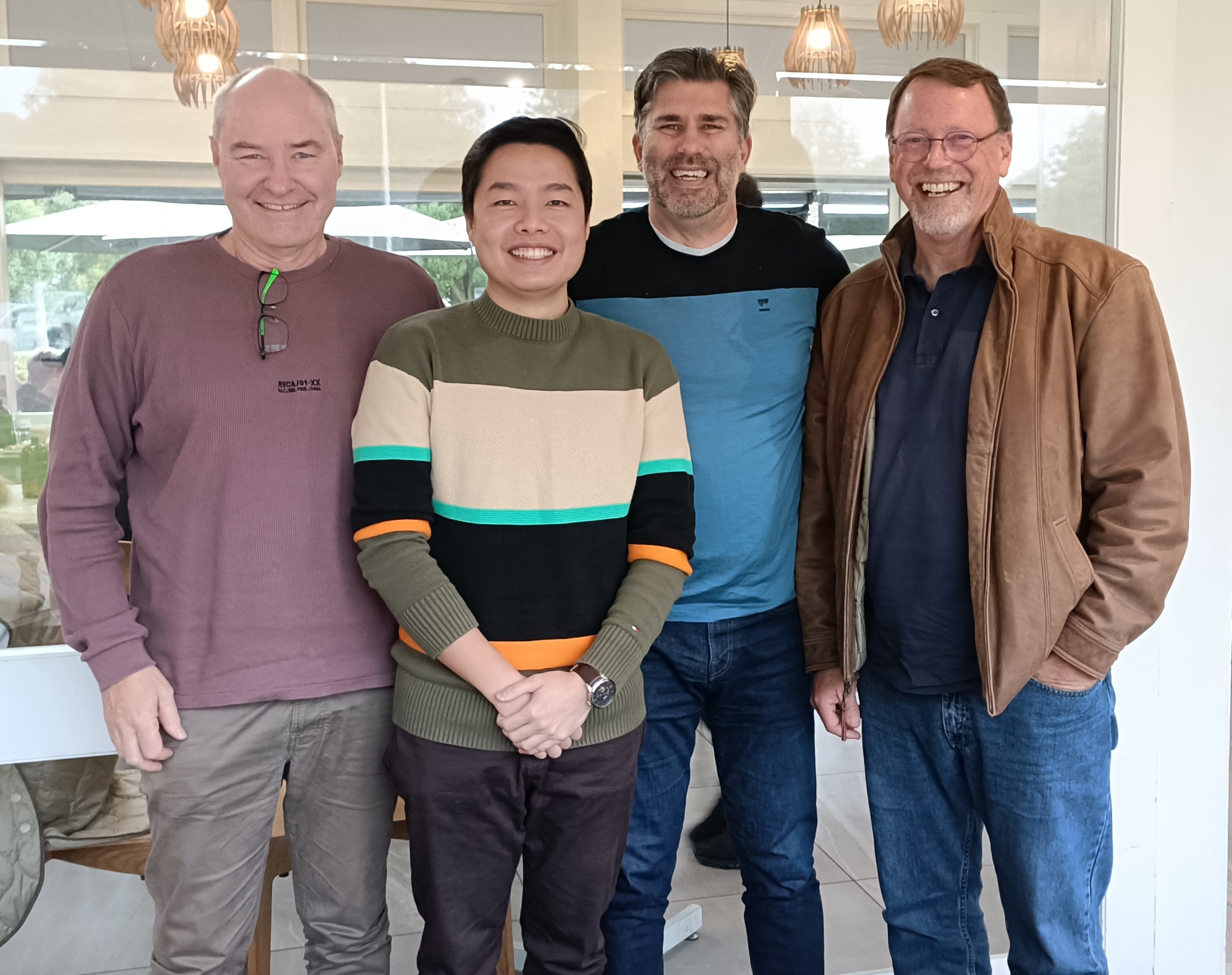
What connects a retrofitted 3D printer, a camera and the internet to preventing loss of vision? The answer lies with a group of creative engineering researchers from the University of Auckland, led by Dr Jaspreet Dhupia and Dr Renoh Johnson Chalakkal.
This group has developed a new approach to teleophthalmology that has the potential to bypass bottlenecks in the public health system and benefit those with limited access to specialist eye care. Members of the project team include Scott Davidson from the Dargaville Medical Centre; Te Hau Ora O Ngāpuhi CEO Tia Ashbury; digital researcher Nataly Martini and robotics researcher Professor Bruce MacDonald from the University of Auckland.
“Vision loss is a major issue for people living with diabetes, often resulting from diabetic retinopathy and other eye complications.,” says Dr Chalakkal, Director of Research at oDocs Eyecare, manufacturers of the retinal imaging device used in the prototype. “It is really useful if you can screen it at an early stage, and that’s where our prototype can look at the back of the eye to help identify any irregularities in the macular region that can indicate an issue.”
“We know that 90 percent of vision loss is preventable, but New Zealand has only around 175 actively practising ophthalmologists and they’re mostly based in urban areas. This is a big issue for poorer and remote areas. We know that the first point of contact for a patient is often a GP who doesn’t have the skills or equipment to make a diagnosis related to the eye, and that patients can wait up to six months to see an eyecare specialist,” says Dr Dhupia, a senior lecturer in Mechanical and Mechatronics engineering at the University of Auckland.
“From our interviews at Dargaville Medical Centre (DMC), we found that, on average, their staff collectively refer approximately 28 patients to eye specialists per month. Given there are approximately 190 rural general practices, and that DMC is an average sized rural clinic, this system could benefit 5,320 patients per month,” says team member Danny Su, who is also CEO for Vistavision Eyecare Ltd, which is planning to manufacture and implement the system across New Zealand and the Pacific.
Dr Dhupia and his team began with a converted 3D printer and specialised portable camera, an internet connection and a telemedicine portal. They set up two trials in Northland – one in Kaikohe and one in Dargaville.
“Kaikohe was an ideal testing ground. People with eye problems face many challenges in getting a diagnosis, because of transportation, work commitments and caring for their young ones, through to money and required family support to make the trip,” says Dr Dhupia. “Teleophthalmology offers a way around those problems because the unit is portable and can be shared across communities. It delivers real-time results, imagery and consultation with a specialist who can be anywhere in New Zealand.”
In this time of scarce resources and funding, Dr Dhupia says the device is pretty simple, meaning it’s very cost-effective to manufacture and replicate for rural communities where they could be accessed through GPs or in the local pharmacy.
The eye examination process itself is also simple. The patient sits in front of the device – soon to be custom-made rather than a retrofitted printer – and looks down the barrel of the camera to focus on a green light. The camera is controlled remotely, and is connected to a user interface where the patient can see and speak to the specialist.
Early trials focused on retinal (back of the eye) imaging, but Dr Dhupia says future trials plan to include front-of-eye scanning and integrating AI technology into the platform, which could help reduce specialist workloads. Results so far have produced useful and positive feedback; patients were happy with the process and not intimidated by the machine.
From here, Dr Dhupia says the team are exploring two paths. The first is expanding their teleophthalmology ecosystem by engaging specialists interested in trialling the system, in partnership with the Fred Hollows Foundation for people in the Pacific. The second is refining the prototype by taking user input, adding features for comprehensive checks and software and hardware improvements for an automated system that is easily operated by clinicians.
Drs Chalakkal and Dhupia also recently conducted a tele-robotics trial internationally at Choithram Netralaya - India involving 100 patients. Specialists joined virtually from New Zealand, controlling the retinal imaging devices located 12000kms away in India, while patients at the Choithram side were supported by a local optometrist.
This project is supported by MedTech RAP Stage II and Health Research Council of New Zealand grants.
.jpg)